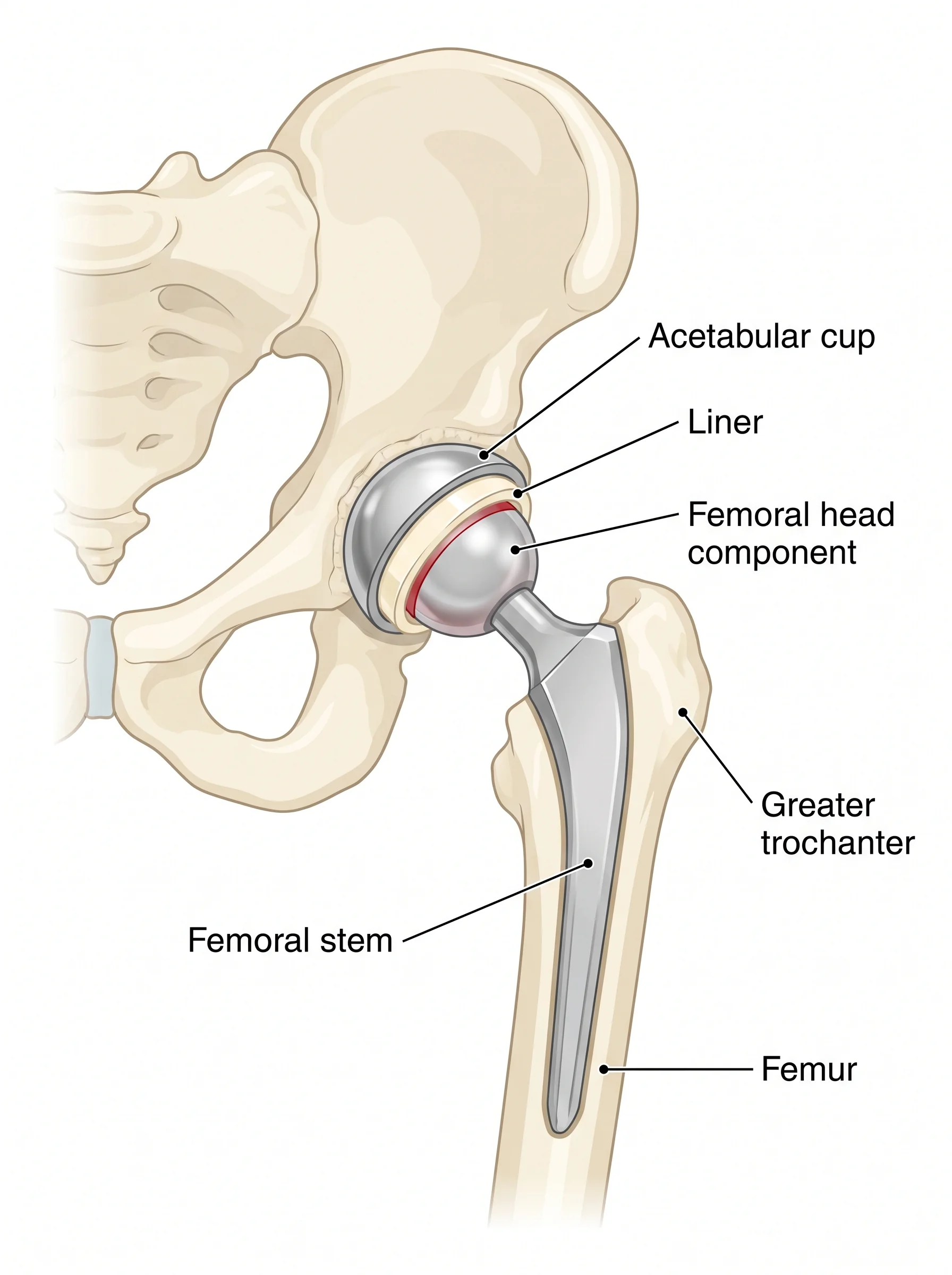
Total hip replacement is surgery that removes the damaged ball and socket of the hip and replaces them with an implant. Dr. McMillan performs hip replacement in Burlington Township for people whose arthritis or joint damage no longer responds to non-surgical care, after conservative options such as therapy and injections have been tried.
Sean McMillan performs total hip replacement in Burlington Township when it is the right step, and reviews every alternative with you first.
Who performs total hip replacement in Burlington Township?
Sean McMillan is a board certified orthopedic surgeon who performs total hip replacement in Burlington Township, NJ. Fellowship trained at University of Massachusetts, Worcester, MA (Arthroscopic Sports Medicine: Shoulders, Hips, Knees and Elbows). Dr. McMillan sees patients at the practice in Burlington Township; appointments can be requested through this site.
What is Total Hip Replacement?
Total hip replacement is a procedure that replaces a worn hip joint with an artificial one.
The surgeon removes the damaged ball at the top of the thigh bone and the worn surface of the socket, then places a metal, plastic, or ceramic implant that recreates the joint.
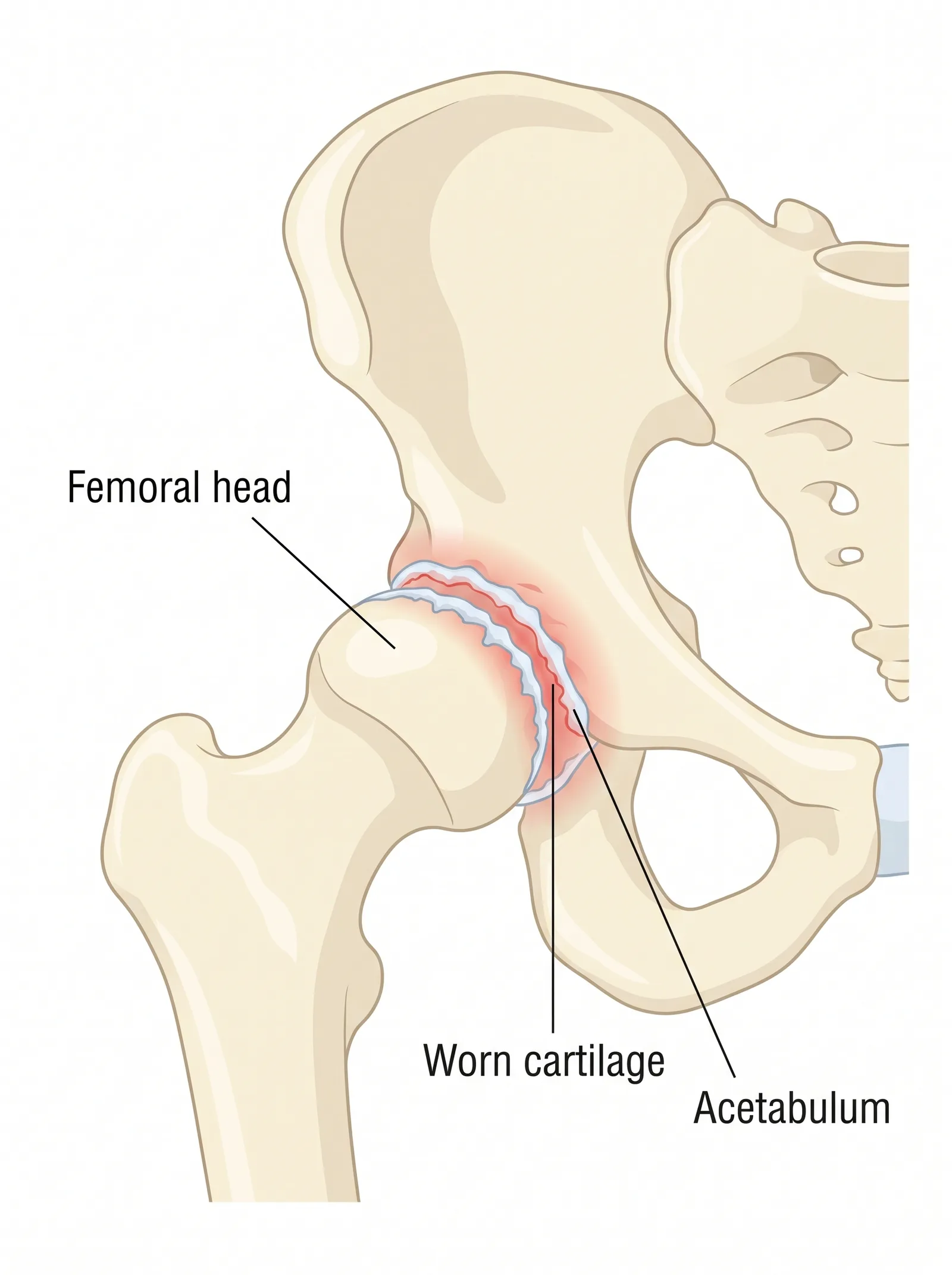
It is most often used for hip arthritis, the wearing of cartilage that cushions the joint, when pain limits walking, sleep, or daily activity. It is also used after certain fractures and for joint damage from other conditions.
The goal is to reduce pain and restore movement. Surgery is a step taken after non-surgical care has been tried, not a first response to hip pain.
What happens during Total Hip Replacement, step by step?
During a total hip replacement, the surgeon reaches the joint through an incision, removes the damaged ball and socket surfaces, and places the implant components.
The socket is lined with a smooth cup, and a new ball on a stem is fitted into the thigh bone, recreating a joint that glides.
Surgeons use different approaches, meaning the direction from which the joint is reached, such as anterior from the front or posterior from the back. No single approach is right for everyone; the choice depends on your anatomy and your surgeon's judgment. The implant materials and fixation are also selected for your case.
What is recovery like after Total Hip Replacement?
Recovery from hip replacement happens in stages.
Many people stand and take steps with support the day of surgery or the next day. Walking with a cane or walker for a period is common, and many people move to walking without an aid over the following weeks. Returning to low-impact activities such as walking for exercise or cycling commonly takes about 6 to 12 weeks, according to general guidance from the American Academy of Orthopaedic Surgeons. These are ranges, not promises. Your timeline depends on your health before surgery, your rehabilitation, and the demands of your daily life. Your surgical team will map it with you.
Read the full guide to preparing for surgery →
Your own recovery instructions come from the office and are specific to you. This page describes the general course, not a plan to follow.
What do patients ask most?
How long does a hip replacement last?+
When is hip replacement the right choice?+
What is the difference between anterior and posterior hip replacement?+
Will I be able to walk after hip replacement?+
How do payments work?
Contact the office to confirm insurance participation.
Fellowship trained at University of Massachusetts, Worcester, MA (Arthroscopic Sports Medicine: Shoulders, Hips, Knees and Elbows). Sees patients in Burlington Township.
About Dr. McMillan →